.jpeg)
As we drove north of Mazatlán, we crossed the Tropic of Cancer, which is the line of latitude where the sun is directly overhead on the June Solistice. This is at approximately 23˚ 26' currently, but was at 23˚ 27' when the sign was put up. This is because the Earth wobbles a bit on it's axis so there is some fluctuation to it's exact geolocation over time. Interestingly, the Tropic of Cancer is defined as the southern border of the NATO alliance, so any territory that is below the Tropic of Cancer lies outside the NATO mutual assistance clause. This includes HAWAII. So China can invade Hawaii and have no fears of NATO retaliation. Well it is the North Atlantic Treaty Organization, after all.
.jpeg)
We continued heading north west of Mazatlán along Mex15, driving past fields of various crops including corn, agave, wheat and sorghum. There were also many mango orchards and cattle ranches in the rolling hillsides.
.jpeg)
As we rose in elevation into the foothills of the Sierra Madre Mountains, we saw large cacti that looked like cousins to the Saguaro cacti of the Sonoran deserts to the north. These are called Pipe Organ cacti. These cousins are just as impressive and differ in that while Saguaro start off as a single trunk which develop arms as they age, Pipe Organ cacti are more bushy, sprouting multiple branches simultaneously, reaching toward the heavens like the pipes of a church organ. Many were in bloom, but these cacti produce sweet fruit that are covered in very long and extremely sharp spines. The blossoms only open at night and are pollenated by nocturnal bats.
.jpeg)


The first village we drove through was El Puente De El Quelite. They have a population of under 300. Over 90% of households have electricity and running water with toilets, but less than 10% have computers with internet, but over 80% have cell phones. Their cell phone coverage is better than Whidbey Island's.
They have a statue in town honoring the sport of Ulama, which is a descendant of the ball game played by the Aztecs and Mesoamericans since before 1600BC. It is the oldest sport played with a rubber ball. This varient, hip Ulama, is played with a heavy rubber ball weighing 7-9# (imagine a medicine ball). The rules are quite complex. Apparently, you can score a point if your opponents score a point but don't announce it right away. In the days of the Aztecs, the losing team might lose their heads, but the stakes are considerably lower today. This sport was largely eradicated by the Spanish because it had religious connotations, but survived in Sinaloa because there was limited reach of the Spanish Catholic influences in this part of Mexico.

We soon arrived at the village of El Quelite (population ~1800)

As we drove into town we passed a house where a man was making pork rinds in kettles in his front yard.
.jpeg)
One interesting thing we saw was cacti sprouting up on the terra cotta roof tiles. Back home, we might see seedlings and weeds sprouting up in rain gutters.


This town center has a beautiful church and town square. There is an elevated stage centrally and a large covered arena that could be used for sports and dancing in a grand manner.


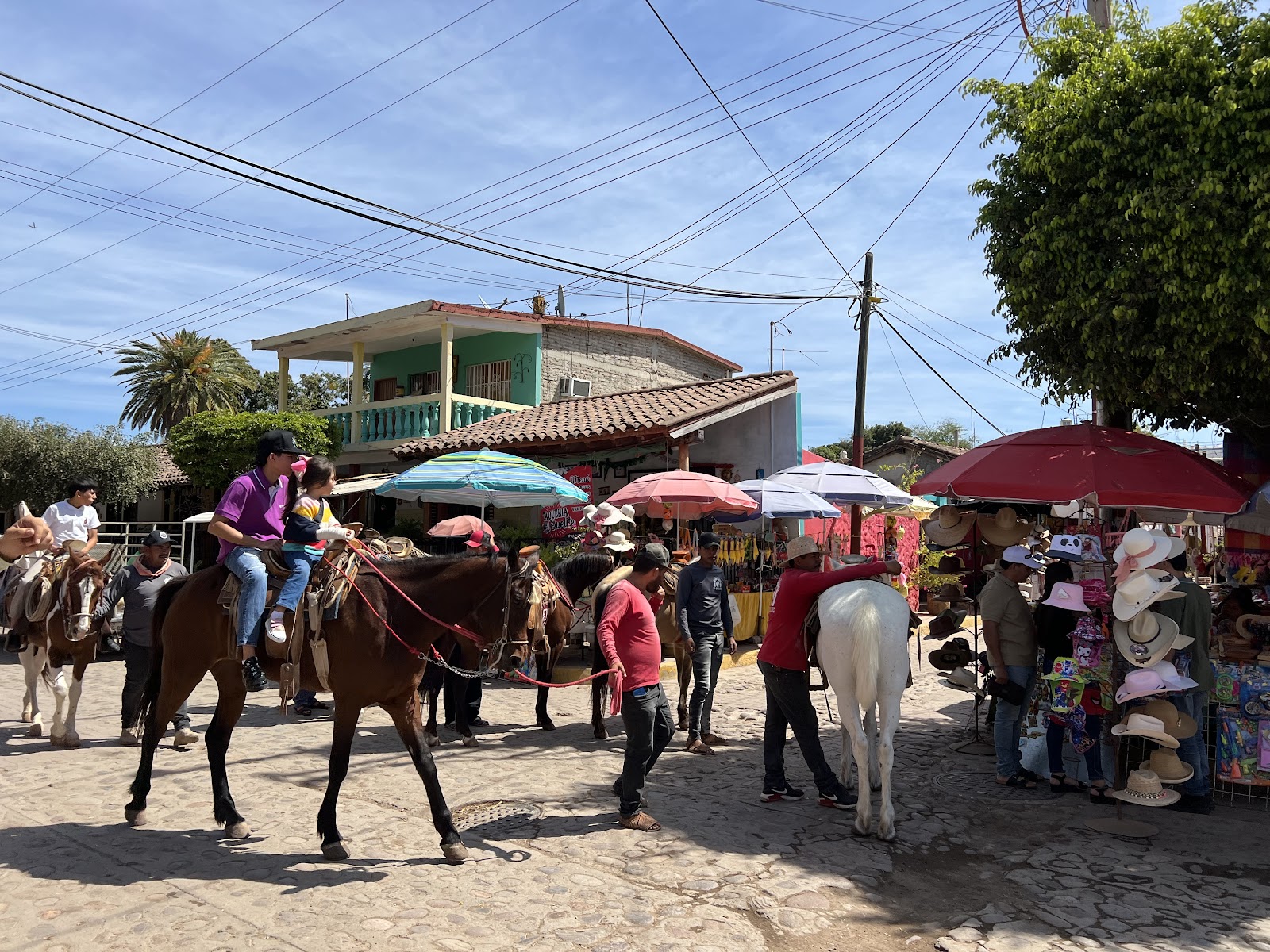
There were many vendors with carts and stalls set up along the main road. When we first arrived, we were the only Gringos in town. There were many horses at the main intersection offered up for horse rides to tourists. We passed on that, instead walking through the town appreciating the architecture and atmosphere.


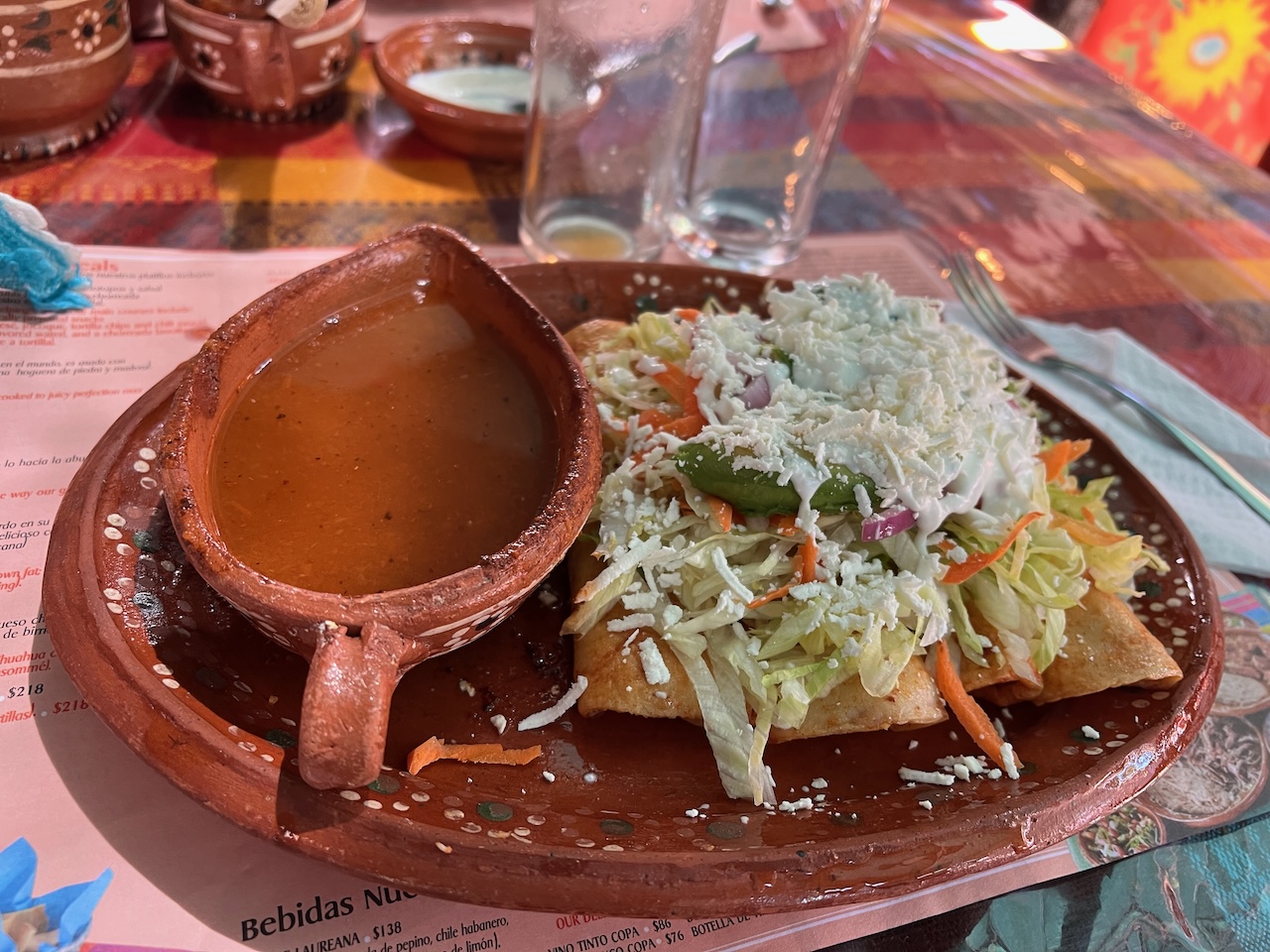
We had an early lunch at the El Mason de Los Laureanos, which the tourism sales person described as the best restaurant in Sinaloa.


.jpeg)
We would have to say it was excellent food and service, although we did have a great experience at the El Charro earlier in the trip. It was interesting that everything we ordered was accompanied by a bowl of clear soup broth. A stuffed Chile that Erin ordered was actually served in the bowl of broth. It must be a Sinaloan tradition. Each entree also came with complementary fresh squeezed orange juice (in lieu of glass of water with ice) coffee, chips, salsa, corn pancakes and corn tortillas. The food came out very quickly and it was very well prepared and tasty. We could barely finish our enormous portions. When we left the restaurant, we saw that a large tourist bus had parked at one end of town, and a wall of tourists were headed into the restaurant we had just left. It was good that we arrived before that bus because we're sure the service won't be as good as it was for us when we were among only a handful of diners in the restaurant.


The toilets in the restaurant had some interesting local touches. The urinal in the men's bathroom was in the shape of a big hog chewing on a corn cob, and the water faucets at the sinks were sculptures.


There was a house on a corner whose back yard was entirely filled with a variety of cactus that locals eat as a staple vegetable. We have had it on a few of our meals in Mazatlán as a side dish, and it has a very slight lime tartness on top of the vegetal rather bland note.

Our next stop was a blue agave plantation and the Osuno Tequila Distillery. On our way there we passed fields with hundreds of little white A-frame animal shelters, which are for roosters bred for cock fighting. This sport is illegal in Mexico, but somehow when the Sinaloa cartel wants to engage in something like cock fighting, it just seems to happen despite any laws.

The blue agave plantation was impressively large with agave plants in various stages of growth. It takes about 7 years for the plants to be ready for harvest. What is harvested is the "pineapple" at the center of the spikey leaves. The spiky leaves are cut off using a tool called a Coa.

We learned how they take the agave pineapples and create Tequila from them. The first step is to steam pressure cook them. This is done with pressure cookers that are dug into the earth as lined pits.

Then they are crushed and macerated into a pulp. This pulp is diluted with distilled water and cooked not unlike a mash that moonshiners make with grains.


This agave slurry is then fermented. The ferment then undergoes two stages of distillation. The first fractionates out the toxic methanol. The second distillation produces what they call Blanco Tequila. This is stored in stainless steel tanks until bottled. Some of this Blanco is stored in white oak barrels sourced from Kentucky USA. Tequila that has been stored in Oak Barrels for 11 months is called Reposado. If it is aged in the oak barrels for 3 years, it becomes Añejo. And if aged for 5 years, it is extra Añejo.
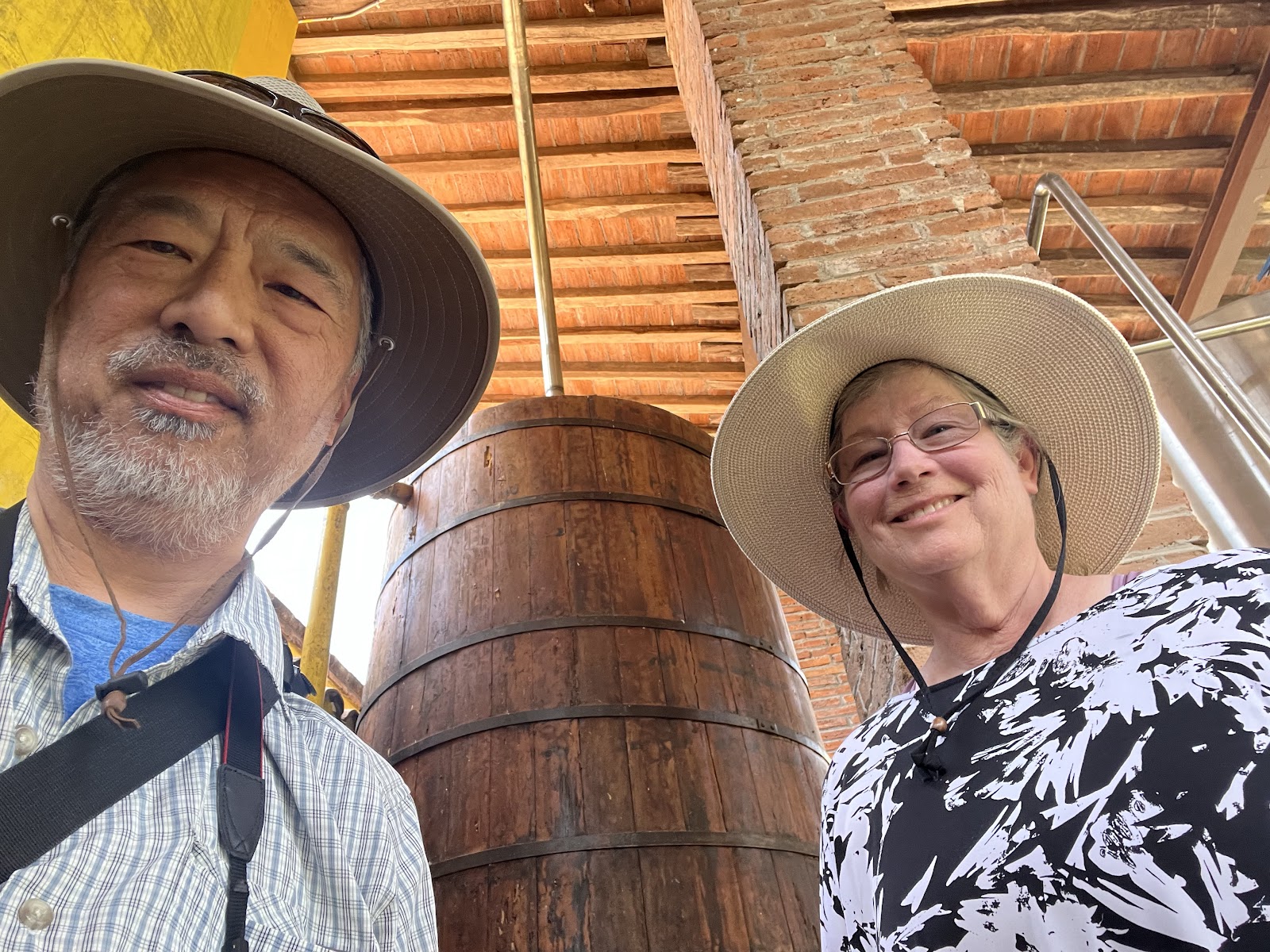
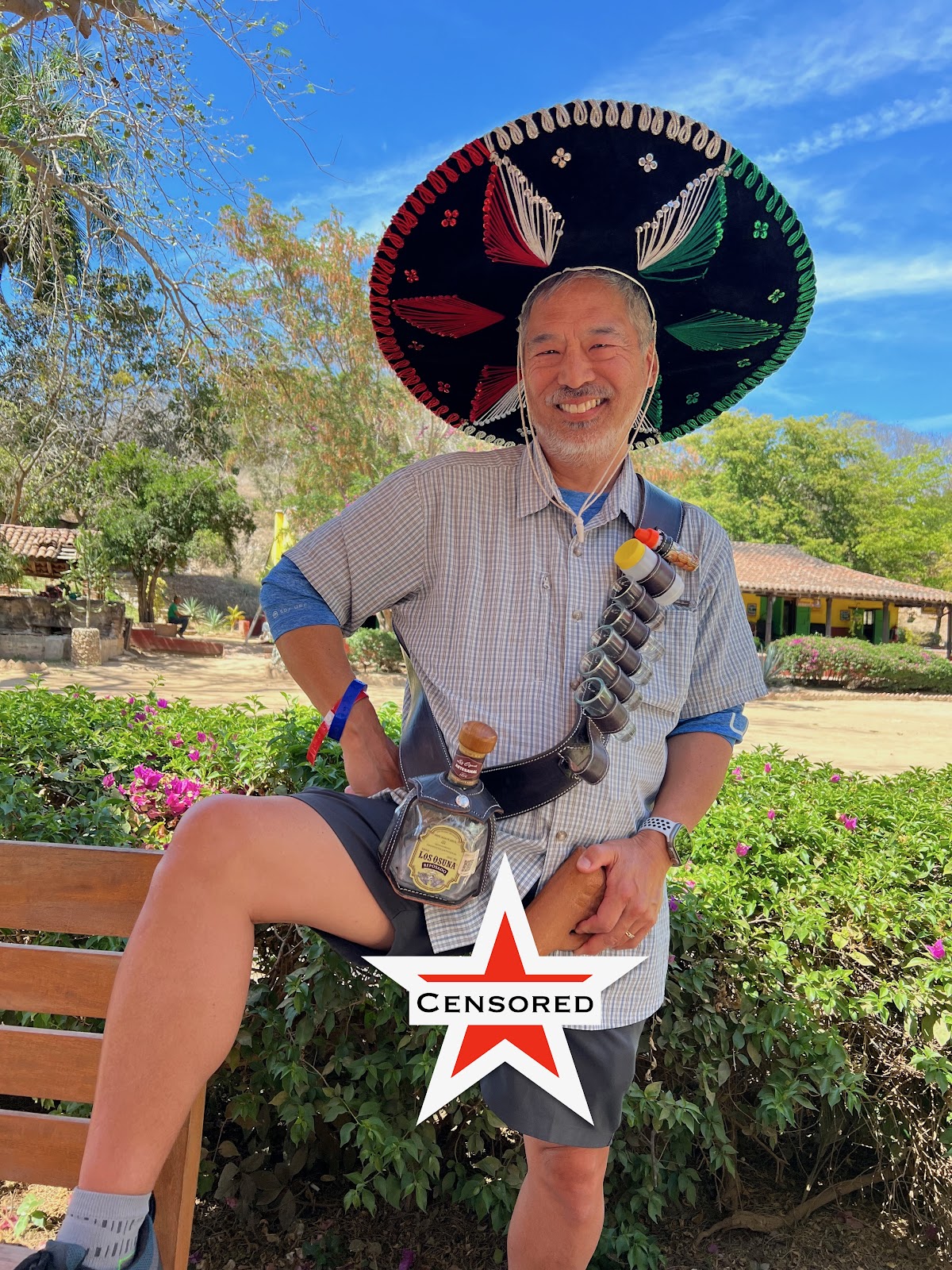
Following the tour came the Tequila tasting. Rather than provide a guided experience, we were simply given tickets for 3 samples of what was available. They had Blanco, Reposado (both 80 proof), and three flavored Tequila liqueurs (40 proof); Coco, Lime and Vanilla. After Googling their product online, it was apparent that it was significantly less expensive to buy at the factory than from a few other distributors in the US, other than in San Diego. So we purchased a bottle of the Añejo for a souvenir of our Mazatlán Solar Eclipse trip.
Our last stop was in a town called Le Noria where there was a leather shop that crafted belts, wallets, sandals and horse saddles. By the time we arrived at this factory, it was 93˚F and many workers were on siesta. We did see someone assembling a sandal and another worker stretching leather for a saddle.


We did get an unofficial bonus stop added when Roberto dropped us off at the Panama bakery. We picked up a variety of pastries for breakfast tomorrow, as well as a local gourmet product "Guava Pie", which looks like a pie filled with diced green cucumbers. We bought one for our guide as part of a gratuity, and one for us to try back at the hotel.

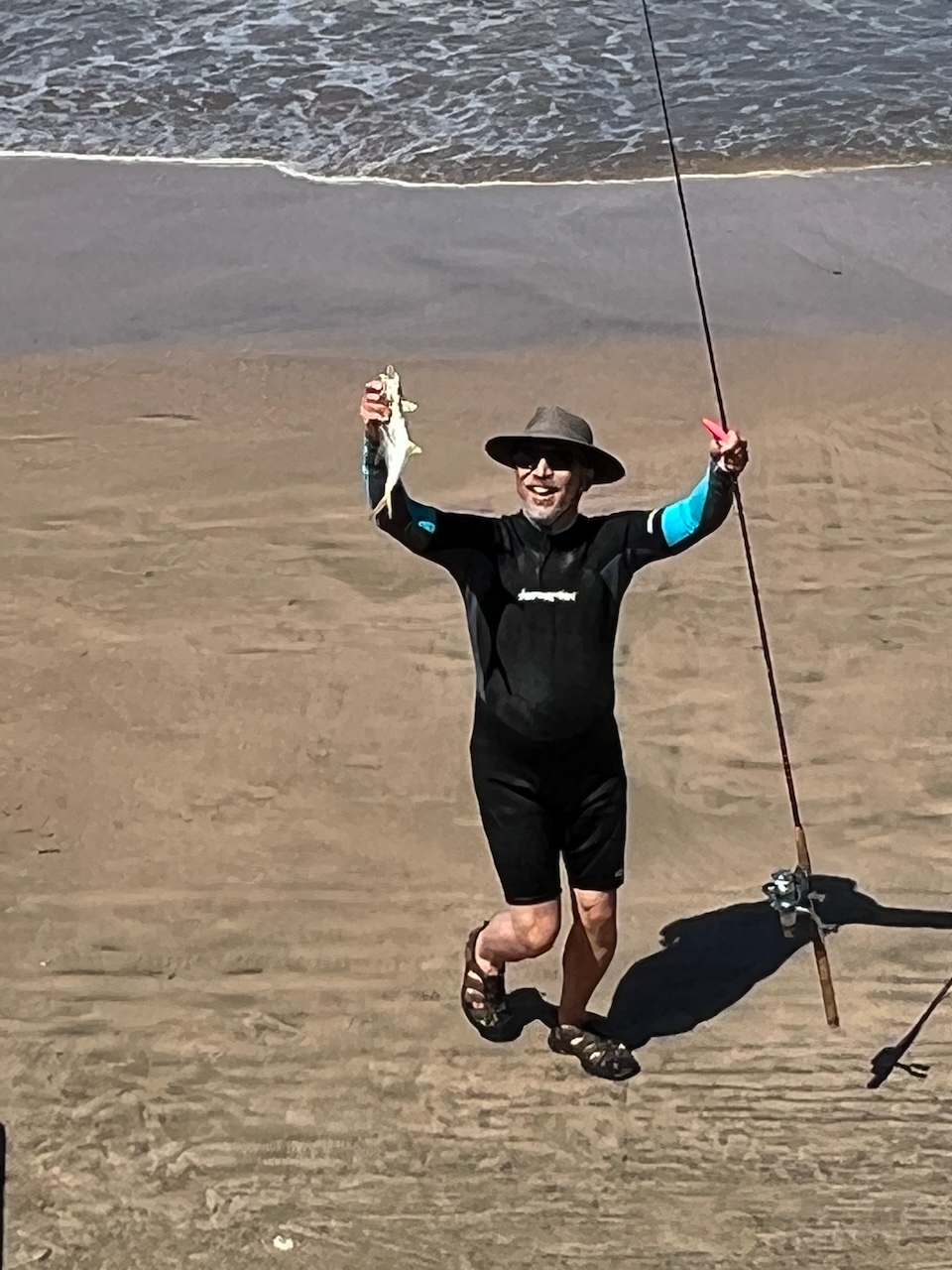
After resting up a bit and getting changed, we hit the pool and beach one last time. Ben spent an hour surf casting/swimming but only getting two strikes that didn't get solidly hooked. As the tide started coming in, huge waves began rolling onto the beach, so it was time to hit the showers.
In the evening we did Carl's Jr takeout and had the guava pie along with Mark and Erin. It was an unusual culinary experience. If you can imagine a pie with diced Asian pear mixed in a cream custard and served in a graham cracker crust, it was not bad, but probably an acquired taste. We also checked in for our homeward flights scheduled for tomorrow, and Ben reserved an Uber to get us to the airport with a known price and credit card billing.